
All plant species
5 species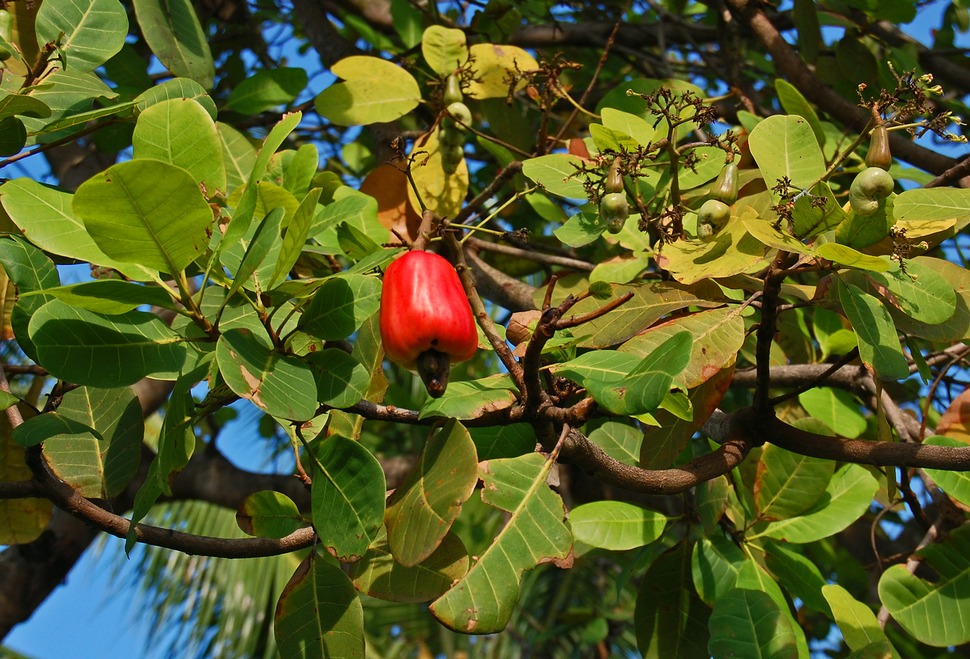 NE
Cashew
Anacardium occidentale L.
Anacardiaceae family
Cashew (Anacardium occidentale L.) is an evergreen tree of the family Anacardiaceae, native to tropical South America (Brazil, especially the north-east). Its fruit consists of the 'cashew apple' — in fact the swollen pedicel and receptacle (a false fruit) — and the true fruit, a kidney-shaped drupe holding the seed. The shell liquid (CNSL) contains anacardic acid, cardol and cardanol, which cause contact dermatitis but are important industrial raw materials (epoxy resins, paints, brake linings); the kernel is rich in lipid (about 44%) and protein. In 2024 world production of raw cashew nuts was about 4.24 million tonnes, led by Ivory Coast and India; Vietnam is the world's largest processor and exporter of cashew kernels.
 NE
Coconut palm
Cocos nucifera L.
Arecaceae family
The coconut (Cocos nucifera L.) is a large tropical palm, the only living species of the genus Cocos (family Arecaceae), with a trunk up to 30 m and a drupe fruit that yields water, kernel, shell and fibre. According to Kew POWO its wild native range is Central Malesia to the SW Pacific; Austronesian peoples domesticated and spread it across the coastal tropics worldwide. Coconut oil is rich in medium-chain saturated fatty acids — lauric acid (C12:0) makes up about 45–50% — together with the MCTs caprylic (C8:0) and capric (C10:0) acids, while coconut water is rich in potassium and sugars. Almost every part is useful: water to drink, kernel as food, copra pressed for oil, coir for mats and brushes, shell for activated charcoal, leaves for wrapping and thatch.
 LC
Nelumbo lutea
Nelumbo lutea
Nelumbonaceae
Nelumbo lutea is a species of flowering plant in the family Nelumbonaceae. Common names include American lotus, yellow lotus, water-chinquapin, and volée. It is native to North America. The botanical name Nelumbo lutea Willd. is the currently recognized name for this species, which has been classified under the former names Nelumbium luteum and Nelumbo pentapetala, among others.
 NE
Rice
Oryza sativa L.
Poaceae family
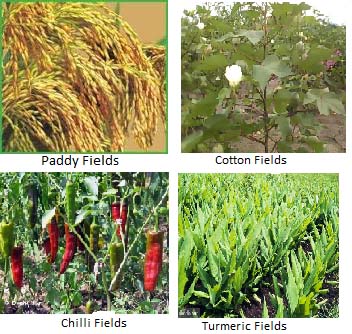
Rice (Oryza sativa L.) is an annual grass of the family Poaceae, the world's most important food crop and the staple for about half of humanity. It was domesticated from the wild ancestor Oryza rufipogon about 9,000 years ago in the Yangtze River basin; the two main groups are japonica (temperate) and indica (tropical). The grain is mainly starch (amylose 15–30%) with the storage protein oryzenin; rice bran oil contains gamma-oryzanol (a mixture of ferulic acid esters of phytosterols and triterpene alcohols), tocopherols and tocotrienols with antioxidant and blood-lipid-lowering effects. World production of milled rice is about 520 million tonnes a year, led by China and India; Vietnam's Mekong Delta grows two to three crops a year.
 NE
Sacred lotus
Nelumbo nucifera Gaertn.
Nelumbonaceae family
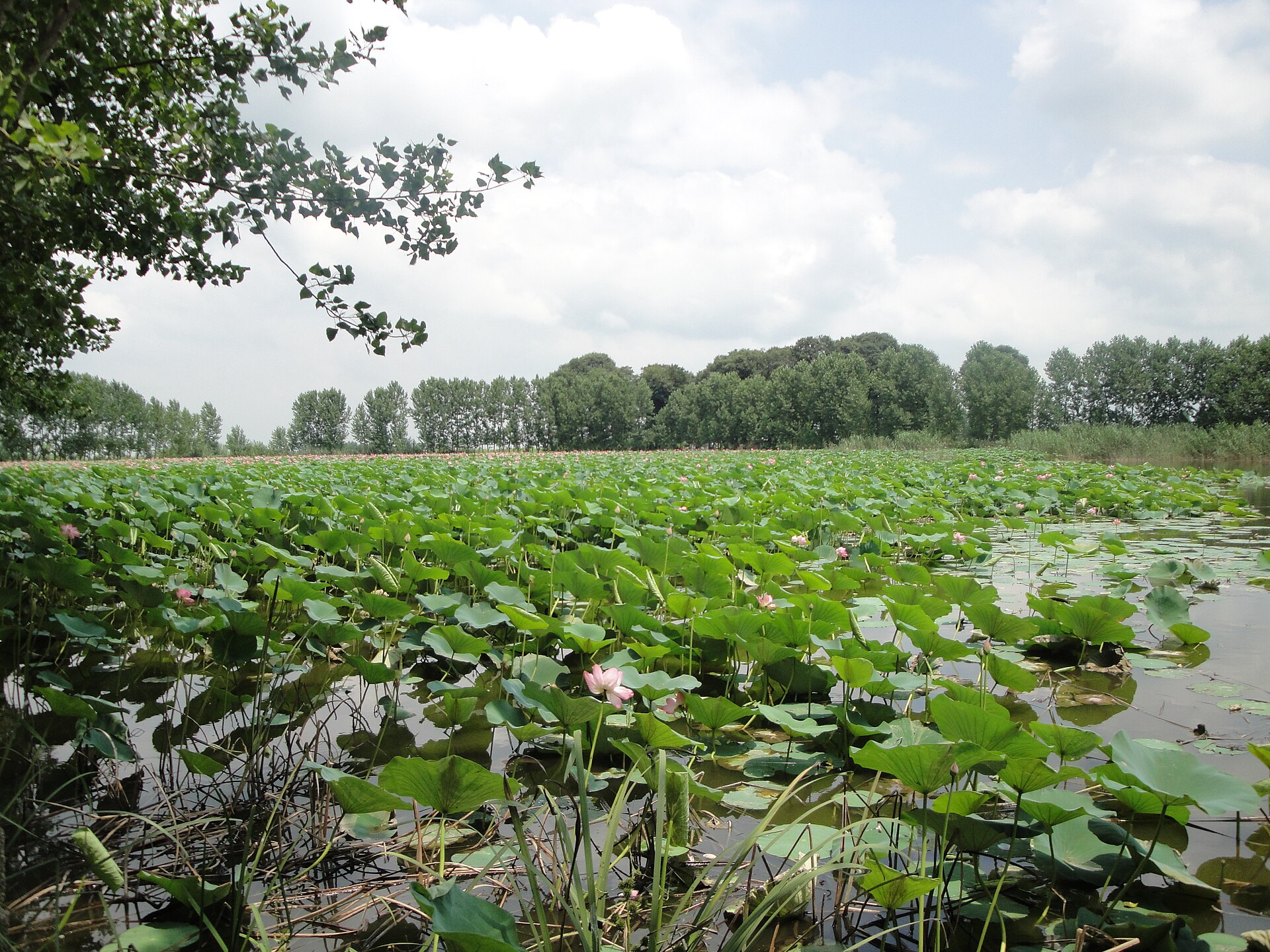
Sacred lotus (Nelumbo nucifera) is a rhizomatous aquatic herb with flowers 15–30 cm across and seeds that can germinate after more than 1,000 years. Its leaves are rich in nuciferine while the seed embryo (plumule) holds liensinine, isoliensinine and neferine, alkaloids studied for cardiovascular, metabolic and anticancer activity.