
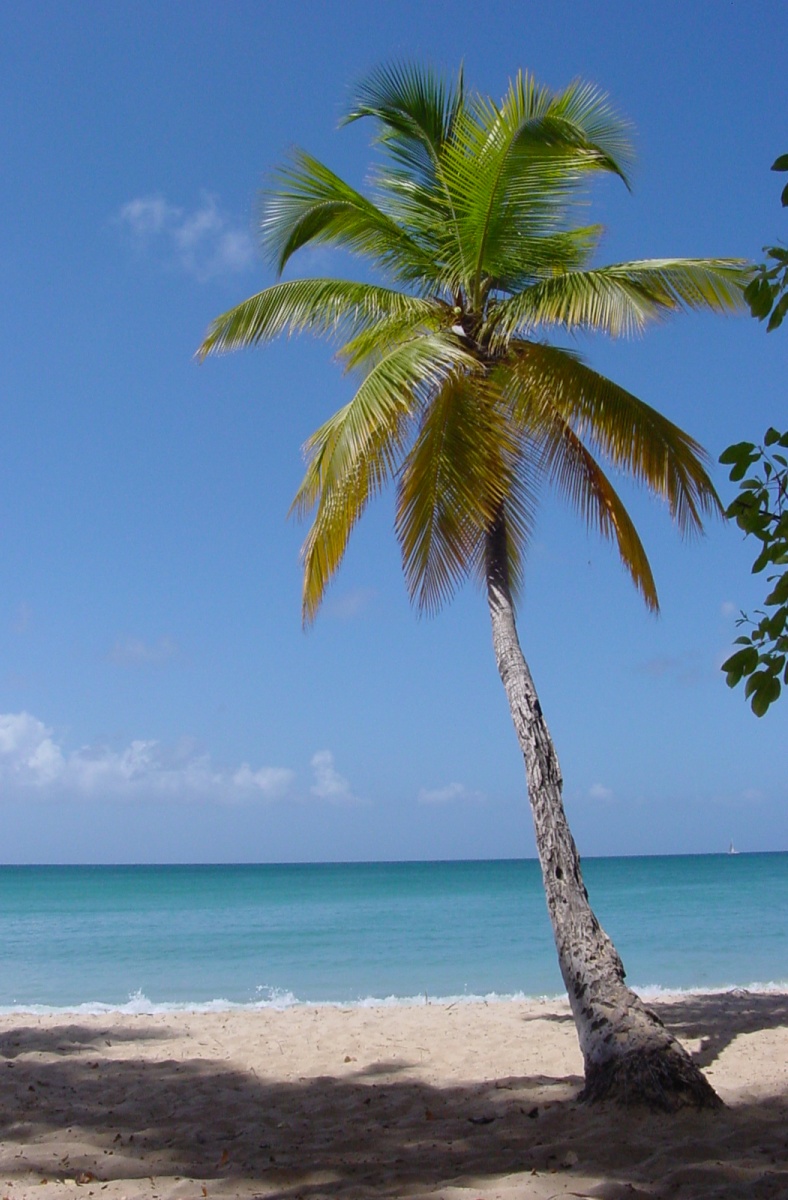
Coconut palm
Cocos nucifera L.
The coconut (Cocos nucifera L.) is a large tropical palm, the only living species of the genus Cocos (family Arecaceae), with a trunk up to 30 m and a drupe fruit that yields water, kernel, shell and fibre. According to Kew POWO its wild native range is Central Malesia to the SW Pacific; Austronesian peoples domesticated and spread it across the coastal tropics worldwide. Coconut oil is rich in medium-chain saturated fatty acids — lauric acid (C12:0) makes up about 45–50% — together with the MCTs caprylic (C8:0) and capric (C10:0) acids, while coconut water is rich in potassium and sugars. Almost every part is useful: water to drink, kernel as food, copra pressed for oil, coir for mats and brushes, shell for activated charcoal, leaves for wrapping and thatch.
No ratings yet — be the first!
Gallery
 Coconut — FruitTán cây xanh
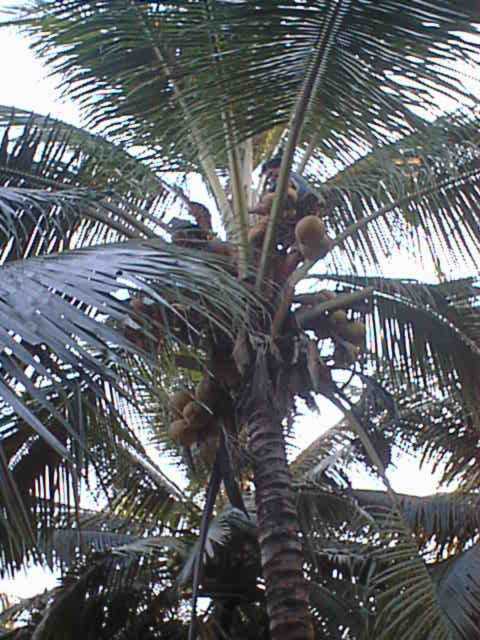 Cây xanh trong nắng
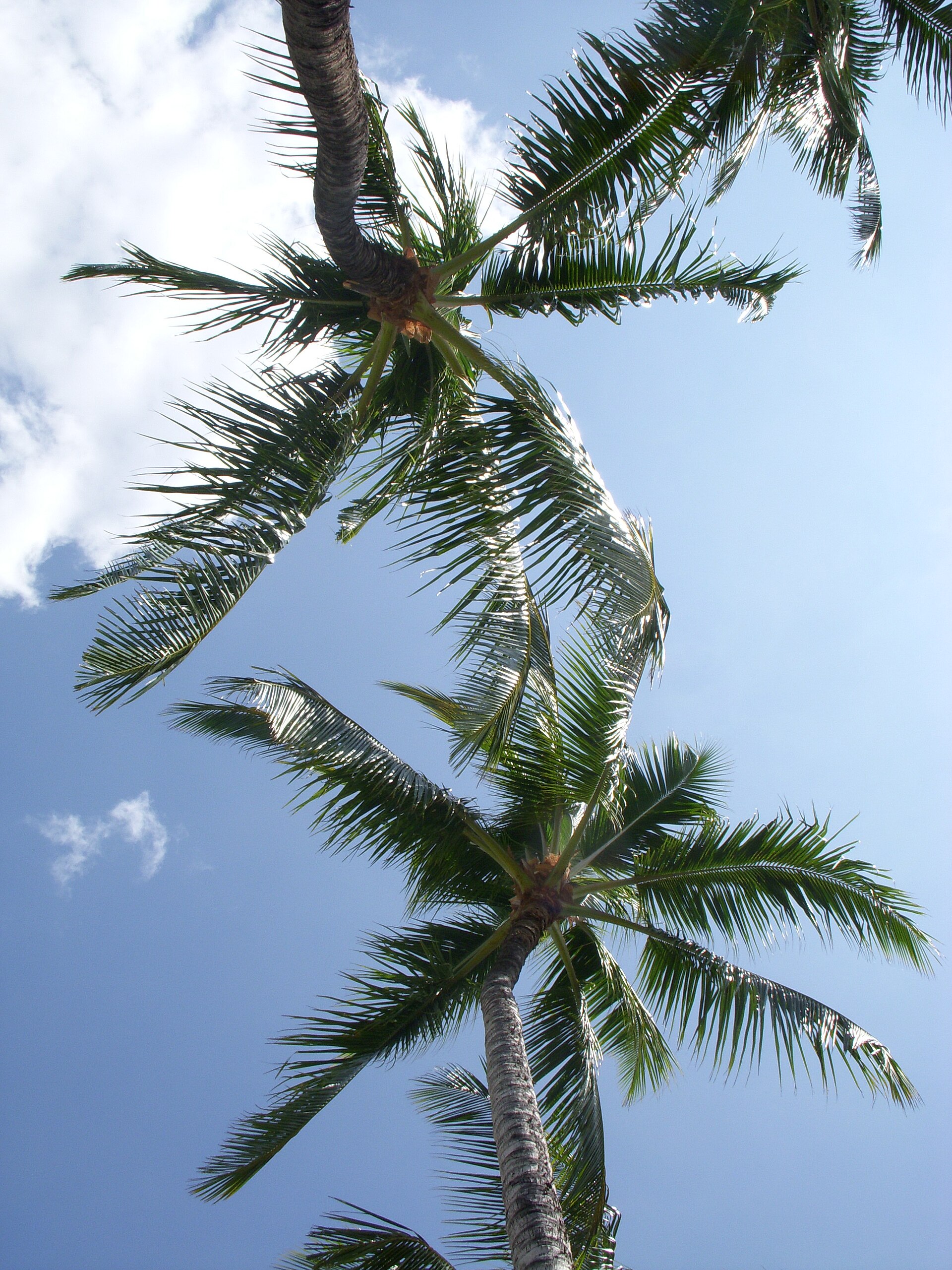 Dừa · ảnh 3
 Coconut — Tree
 Coconut — Tree with fruitCoconut — FruitTán cây xanh
Photo credits: Patrick Verdier, Free On Line Photos (Copyrighted free use) · Kborland (CC BY-SA 3.0) · Millerhr (Public domain)
Overview
The coconut is a solitary, columnar palm 15–30 m tall; its smooth cylindrical trunk is a hallmark of the palm because old leaves break away cleanly, leaving ring-like scars. The leaves are pinnate, 4–6 m long, each pinna 60–90 cm, crowded toward the crown. The root system is fibrous/adventitious — 2,000–4,000 thin roots about 1 cm across, with no taproot and no absorbing root hairs. The palm is monoecious: numerous small male flowers and fewer, much larger female flowers are borne together in the same spadix enclosed in a spathe; a healthy tree can produce up to about 15 inflorescences a year. The fruit is a drupe with an exocarp, a fibrous mesocarp (coir) and a hard woody endocarp bearing three germination pores (two plugged, one functional). The shell is about 4 mm thick; inside, the liquid endosperm (coconut water) later deposits the solid endosperm (coconut meat). Fruit ripens 11–13 months after the female flower opens; tall palms bear first at 6–10 years and live 60–100 years, whereas dwarfs fruit earlier but live less long.
According to Kew POWO the wild native range of Cocos nucifera is Central Malesia to the SW Pacific (Bismarck Archipelago, Maluku, New Guinea, Philippines, Queensland, Samoa, Santa Cruz Islands, Solomon Islands, Tokelau, Tonga, Vanuatu). The centre of genetic diversity is the Central Indo-Pacific, where coconut populations hold the greatest genetic diversity; linguistic, archaeological and genetic evidence all indicate that Pacific coconuts were domesticated by Austronesian peoples in Island Southeast Asia during the Austronesian expansion (about 3000–1500 BCE). The coconut was a pioneering voyage plant: its fruit is light, sealed and provides drinking water, food and boat-building material. Two fruit forms exist: niu kafa (wild/Indo-Atlantic, angular and thick-husked, highly buoyant) and niu vai (domesticated, round and thin-husked with more kernel and water). In the Americas, coconuts were present pre-Columbian in Panama (from about 300 BCE) through Austronesian sailors, then spread by European ships from the 16th century. In cultivation the palm is grown across the coastal tropics — Vietnam's main coconut areas are Ben Tre, Tien Giang, Tra Vinh, Binh Dinh and the central coast. In 2024 world coconut production reached 65.5 million tonnes, with Indonesia (18.0), India (14.7) and the Philippines (14.5) accounting for 72%.
The signature chemistry of the coconut is its oil: coconut oil is about 90% saturated fatty acids, of which lauric acid (C12:0) makes up 45–50%, myristic acid (C14:0) about 18–19%, palmitic acid (C16:0) about 9%, caprylic acid (C8:0) about 7–9% and capric acid (C10:0) about 6%, the balance being mainly oleic acid (C18:1) with some linoleic acid (C18:2). Lauric acid together with the medium-chain caprylic (C8) and capric (C10) acids forms the nutritionally and medically valuable medium-chain triglycerides (MCTs). Fresh coconut meat is about 47% water, 33% fat, 15% carbohydrate (including fibre) and 3.3% protein, and is a rich source of manganese (about 65% DV) and copper (about 48% DV) per 100 g. Coconut water contains sugars (glucose, fructose, sucrose), minerals (potassium, sodium, magnesium, phosphorus), vitamin C and cytokinins (notably trans-zeatin) — plant growth regulators that also have antioxidant activity. The meat also contains phenolics and lactones (delta-decalactone, delta-octalactone) that give the characteristic coconut aroma. In processing, copra (dried kernel) contains 60–65% oil, and coconut oil is among the richest lauric-acid oils, hence the name 'lauric oil'.
The coconut is called 'the tree of a thousand uses': coconut water is drunk fresh or made into nata de coco; the meat is pressed into coconut milk/cream and cooking oil; copra is pressed for oil used in food, soap and cosmetics; coir becomes mats, brooms, rope and growing media; shells and husks make activated charcoal, fuel and musical instruments; leaves are woven into food wraps (pusô, ketupat) and thatch; the trunk supplies timber; and flower sap (toddy) is fermented into palm wine or boiled down to sugar. In research, coconut-oil fatty acids have been characterised by chromatography (Clarke, Barnaby & Reid, Seed Technology, 2018); a cardiometabolic review and an RCT meta-analysis found that lauric-acid-rich coconut oil does not raise C-reactive protein (an inflammation marker) compared with other oils, although lauric acid can activate TLR4 in vitro. Coconut oil supplies MCTs used in post-operative nutrition, sports nutrition and premature-infant formula (USP monograph, 2018). A study in 5×FAD mice (Chen et al., 2025) found that coconut-oil-derived MCTs improved memory, reduced Aβ accumulation and protected hippocampal neurons. Coconut water has been studied as a natural rehydration fluid and was traditionally used as a plant-tissue-culture medium. However, heart associations advise limiting coconut oil because its saturated fat raises LDL cholesterol.
On safety, coconut and coconut water are wholesome foods for most people. Coconut water is rich in potassium, so people with kidney disease or taking potassium-sparing drugs should limit it because of the risk of hyperkalaemia; coconut oil is about 90% saturated fat, so it should be used in moderation to avoid raising LDL cholesterol and cardiovascular risk. Coconut allergy is rare. In folk medicine, coconut oil is used for skin and hair care and as a mild antiseptic. On conservation, according to Kew POWO Cocos nucifera has not been evaluated (Not Evaluated) on the IUCN Red List and is not listed in the CITES appendices; through human dispersal it has become nearly pantropical and is not globally threatened (some regional assessments, e.g. Palms of New Guinea, rank it Least Concern). The main risks are diseases: lethal yellowing (a phytoplasma), cadang-cadang viroid disease in the Philippines and Ganoderma basal rot, together with the coconut leaf beetle Brontispa longissima and the eriophyid mite Aceria guerreronis, which can cause up to 60% production loss in outbreaks. Conservation priorities are to keep cultivar diversity (talls, dwarfs, landraces, Macapuno) in genebanks such as the COGENT network and national coconut research institutes.
Life cycle
From seed to productSeed
Mature nuts fall or drift seaward; the hard shell and about four air pores let the seed float and drift thousands of kilometres.
Germination
On warm, moist ground the seed sprouts in 3 – 4 months, the shoot pushing through one of the shell pores.
Seedling
Seedlings live on the mother kernel for the first year or two, then grow rapidly once they get full light.
Mature plant
The mature palm grows 15 – 25 m tall in full sun and yields roughly 50 – 200 nuts a year.
Flowering & fruiting
The spathe holds male flowers above and female flowers below; insects pollinate them and the fruit ripens in 11 – 12 months.
Harvest
Harvesters climb or use long poles to cut the bunches; nuts are de-watered, copra is pressed for oil, and husk and shell feed industry.
Distribution & origin
Share of recorded occurrences by region- Indonesia27%
- India22%
- Philippines22%
- Brazil5%
- Sri Lanka3%
- Vietnam, Thailand & Mexico8%
- Africa, Latin America & elsewhere13%
Chemical composition
Relative content in agarwood resin- WaterMain component of fresh coconut meat47%
- Fat/coconut oil (rich in lauric acid)Coconut oil ~90% saturated; lauric acid 45–50%24%
- Medium-chain triglycerides (caprylic C8:0, capric C10:0 acids)C8+C10 make up ~13–15% of the oil; medical-grade MCT9%
- Carbohydrates & fibreSugars (sucrose, glucose, fructose) and fibre15%
- ProteinLow, about 3.3% of fresh meat3%
- Minerals (manganese, copper, potassium) & vitaminsRich in manganese (~65% DV) and copper (~48% DV)2%
Uses
- Drink fresh coconut water, used as a natural rehydration fluid
- Coconut meat as food: fresh, coconut milk/cream and preserves
- Coconut oil (from copra) for cooking, soap and cosmetics
- Coir for mats, brooms, rope and growing media
- Shell and husk for activated charcoal, fuel and instruments
- Leaves for wraps, thatch and weaving; sap for sugar/wine; MCTs in medicine
Properties
- Lauric acid in oil
- 45 – 50%
- Coconut water pH
- 4.5 – 6.0
- Copra moisture
- ≈ 6%
- Fresh kernel colour
- White
Habitat & conservation
Coastal tropical lowlands on sandy, free-draining soils, highly salt-tolerant; needs full sun, humidity above 60% and even rainfall of 1,500–2,500 mm a year. Optimum temperature 27–32 °C; grown from sea level to about 600 m (occasionally 1,000 m), on soils of pH 4.5–8 (preferring 5.5–7). It does not tolerate waterlogging or shade, but with less rain it survives if roots reach the water table. In Vietnam it is grown mainly on coastal lowlands, especially in Ben Tre, Tien Giang, Tra Vinh and Binh Dinh.
Conservation
According to Kew POWO, Cocos nucifera has not been evaluated (NE) on the IUCN Red List and is not listed in the CITES appendices; through human dispersal it has become nearly pantropical and is not globally threatened (some regional assessments, e.g. Palms of New Guinea, rank it Least Concern). The main risks are diseases: lethal yellowing (a phytoplasma), cadang-cadang viroid disease in the Philippines and Ganoderma basal rot, together with the coconut leaf beetle Brontispa longissima and the eriophyid mite Aceria guerreronis, which can cause up to 60% production loss in outbreaks. Conservation priorities are to keep cultivar diversity (talls, dwarfs, landraces, Macapuno) in genebanks such as the COGENT network and national coconut research institutes.
References
- 1Plants of the World Online — Cocos nucifera L. — Kew Science, 2026
- 2Independent Origins of Cultivated Coconut (Cocos nucifera L.) in the Old World Tropics — PLoS ONE 6(6):e21143 (Gunn et al.), 2011
- 3FAOSTAT — Crops and livestock products (coconut production, 2024) — Food and Agriculture Organization of the UN (FAO), 2024
- 4Statistical Bulletin — Coconut Community Countries — Asian and Pacific Coconut Community (APCC), 2024
- 5Lauric Acid Composition of Cocos nucifera (Coconut) Oil — Seed Technology 39 (Clarke, Barnaby & Reid), 2018
- 6Chemistry and composition of coconut oil and its biological activities — Barlina et al., Elsevier book chapter, 2022
- 7Coconut oil derived medium-chain triglycerides ameliorated memory deficits in 5×FAD mice — Chen et al., PMC/NCBI, 2025
- 8Triglycerides of medium-chain fatty acids: a concise review — Journal of Food Science and Technology (PMC9217113), 2022