
Rice
Oryza sativa L.
Rice (Oryza sativa L.) is an annual grass of the family Poaceae, the world's most important food crop and the staple for about half of humanity. It was domesticated from the wild ancestor Oryza rufipogon about 9,000 years ago in the Yangtze River basin; the two main groups are japonica (temperate) and indica (tropical). The grain is mainly starch (amylose 15–30%) with the storage protein oryzenin; rice bran oil contains gamma-oryzanol (a mixture of ferulic acid esters of phytosterols and triterpene alcohols), tocopherols and tocotrienols with antioxidant and blood-lipid-lowering effects. World production of milled rice is about 520 million tonnes a year, led by China and India; Vietnam's Mekong Delta grows two to three crops a year.
No ratings yet — be the first!
Gallery
 Rice — PanicleCánh đồng trong nắng
 Lá xanh
 Lúa · ảnh 3
 Rice — Paddy field
 Rice — Plant in flowerRice — PanicleCánh đồng trong nắng
Photo credits: த*உழவன் (CC BY-SA 3.0) · Desmanthus4food (CC BY-SA 3.0 us) · Pratap pudota (CC BY-SA 3.0)
Overview
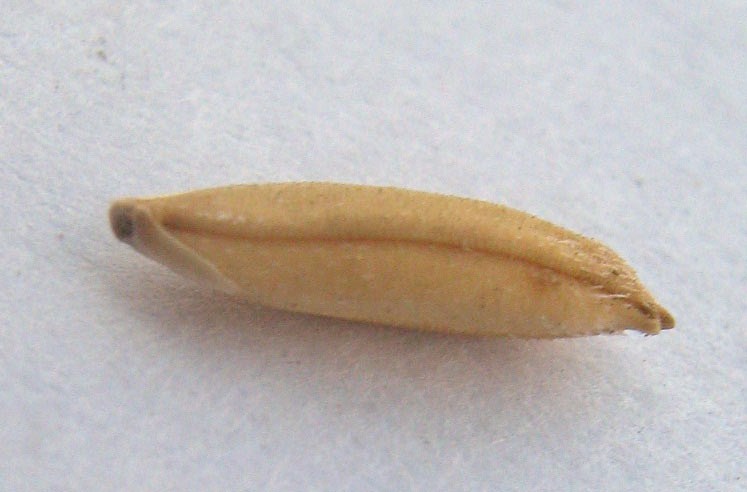
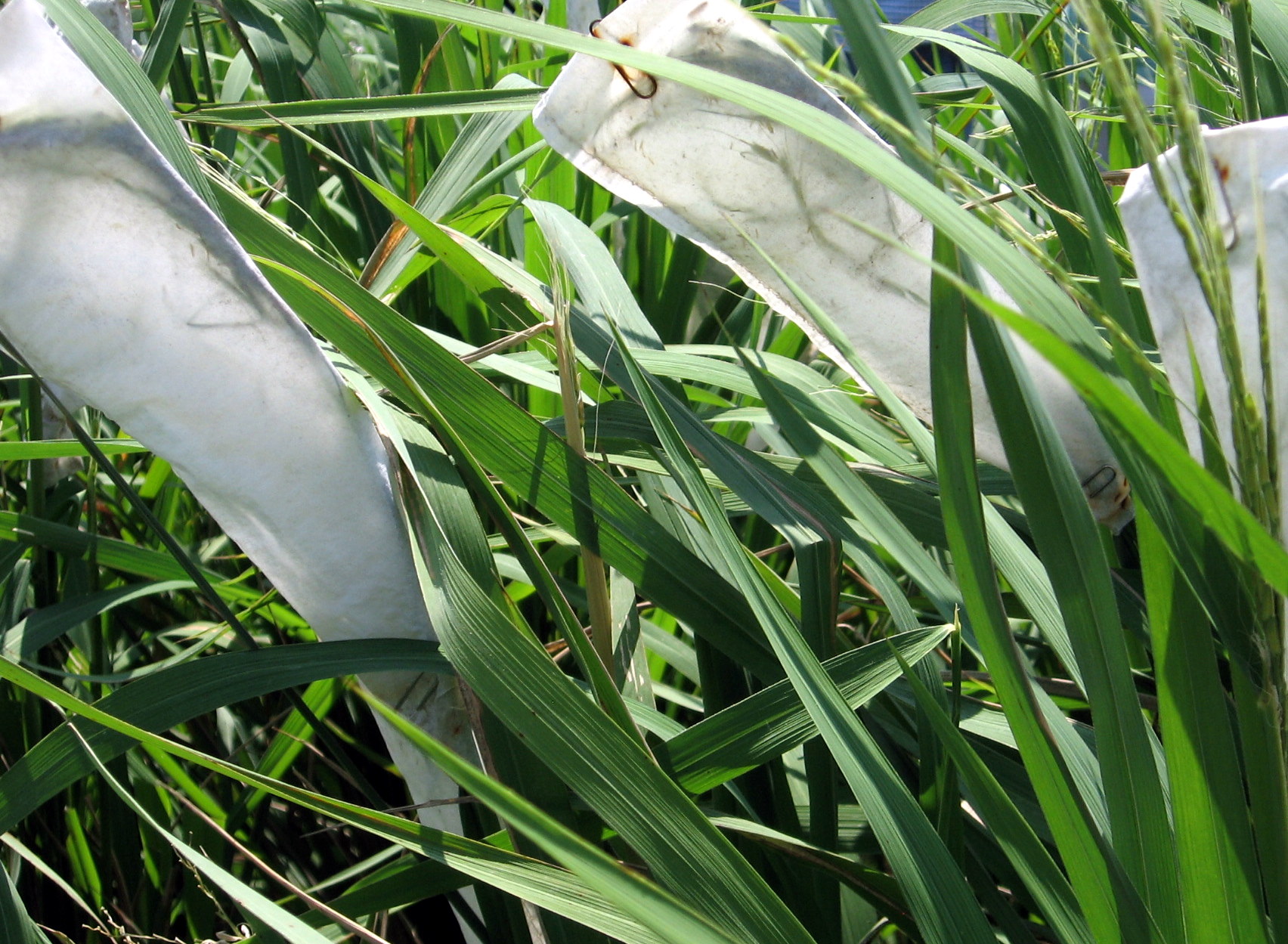
Rice is an annual grass (sometimes perennial in the tropics) 0.7–1.2 m tall with a hollow, jointed stem. The leaves are arranged in two ranks, the blade 20–40 cm long, with a small ligule; the shallow fibrous roots hold the surface paddy mud. The inflorescence is a panicle 20–40 cm long bearing many small bisexual spikelets, each flower with six stamens and one ovary; rice is self-pollinating. The grain is a caryopsis enclosed by the husk (lemma and palea); the part consumed is the starchy endosperm left after milling, together with the bran layer and germ. The chromosome number is 2n = 24 and the genome is about 430 Mb.
According to Kew POWO, Oryza sativa L. (Sp. Pl.: 333, 1753; LSID urn:lsid:ipni.org:names:316812-2) is recorded as a cultigen originating in China; its wild ancestor Oryza rufipogon grows across South and Southeast Asia. The earliest domesticated rice remains come from the lower Yangtze valley, about 9,000 years ago; japonica was domesticated first (about 7,000 years ago in the Yangtze basin) and indica later (about 4,000 years ago in the Ganges plains). Rice spread slowly because of its large water requirement, then followed trade routes to Africa, Europe and the Americas. Today it is grown on every continent with enough water. World production of milled rice is about 520 million tonnes a year, led by China, India, Indonesia, Bangladesh, Vietnam and Thailand.
The starchy endosperm contains about 76–80% starch; amylose makes up 15–30% in non-glutinous rice and under 5% in waxy (glutinous) rice, determining stickiness and glycaemic index. The main storage protein is oryzenin (a glutelin) at about 7–8%. Rice bran oil has a fatty-acid profile of about 38.4% oleic acid, 34.4% linoleic acid, 21.5% palmitic acid and 2.9% stearic acid; its unsaponifiable fraction (about 4.2%) contains gamma-oryzanol (about 1.6%), tocopherols (about 81 mg%) and squalene (about 320 mg%). Gamma-oryzanol is a mixture of ferulic acid esters of triterpene alcohols (cycloartenol about 106 mg%, 24-methylenecycloartanol about 494 mg%) and phytosterols, regarded as the main active of rice bran; tocotrienols inhibit HMG-CoA reductase and so help lower cholesterol. The characteristic aroma compound is 2-acetyl-1-pyrroline (2-AP). Bran is also rich in ferulic acid and bound phenolic acids.
Rice is a multi-purpose crop. The grain is the staple food (boiled rice, congee) and the raw material for noodles, rice cakes, rice paper, rice vermicelli, sake and rice vinegar; rice starch is used as a pharmaceutical excipient and industrial additive; rice bran oil and gamma-oryzanol are used in functional foods and cosmetics; straw serves as livestock feed, bedding and for weaving; husks are used as biomass fuel and material. In research, Rukmini & Raghuram (Journal of the American College of Nutrition, 1991) reviewed the blood-lipid-lowering action of rice bran oil; Ghatak & Panchal (Current Nutrition & Food Science, 2011) systematised the pharmacology of gamma-oryzanol; Friedman (Journal of Agricultural and Food Chemistry, 2013) reviewed the composition and bioactivities of brans, bran oils and hulls; Tan et al. (Nutrients, 2023) highlighted the potential of rice bran against metabolic disease; Juricic et al. (Antioxidants, 2025) updated the biochemical, biological and clinical properties of gamma-oryzanol. Breeding also targets salt- and drought-tolerant and micronutrient-rich rice (Golden Rice).
On safety, rice is a safe, nutritious staple, but paddy rice accumulates inorganic arsenic in the grain — brown rice and rice grown on contaminated soils carry more, so some agencies recommend diversifying the diet, especially for young children. Heavily polished white rice loses vitamin B1 and can cause beriberi (numbness and swelling) on a monotonous diet; non-glutinous rice has a high glycaemic index, so people with diabetes should moderate it. True rice allergy is rare. On conservation, the IUCN has not assessed Oryza sativa (NE); genetic resources are held mainly in seed banks — the IRRI International Rice Genebank conserves more than 130,000 accessions, with safety duplicates sent to the Svalbard Global Seed Vault. The main threats to genetic diversity are landraces being replaced by a few high-yielding hybrids, salinity intrusion and water shortage in the deltas, and pests such as the brown planthopper (Nilaparvata lugens) and blast (Magnaporthe oryzae).
Life cycle
From seed to productSeed
The seed is paddy — a grain still in its husk — stored at up to 14% moisture before sowing.
Germination
Pre-germinated seed is sown in a seedbed, where it grows for 3 – 4 weeks before transplanting.
Seedling
Seedlings are transplanted or direct-seeded into flooded fields; the young plant tillers and takes nutrients from the mud during the first 30 – 40 days.
Mature plant
The mature plant stands 0.7 – 1.2 m in 5 – 10 cm of standing water, and the whole crop cycle runs 90 – 130 days.
Heading & grain filling
Panicles emerge from the sheath and self-pollinate; nutrients move into the grain, which fills and ripens gold in 30 – 40 days.
Harvest
Rice is harvested at 13 – 14% moisture, dried and then milled to remove husk and bran, yielding white rice.
Distribution & origin
Share of recorded occurrences by region- China28%
- India25%
- Indonesia7%
- Bangladesh7%
- Vietnam5%
- Thailand4%
- Myanmar, Philippines, Japan & elsewhere24%
Chemical composition
Relative content in agarwood resin- Starch (amylose & amylopectin)~76–80% of endosperm; amylose 15–30% (non-glutinous)66%
- Water~12–14% in dried grain13%
- Protein (oryzenin)~7–8% of the grain7%
- Dietary fibre & branHigher in brown rice6%
- Lipids (bran oil: oleic, linoleic, palmitic)Mainly in bran and germ3%
- Gamma-oryzanol & ferulic acidFerulic acid esters of triterpenes and phytosterols; antioxidant2%
- Tocopherol/tocotrienol, B vitamins & mineralsVitamin E lowers cholesterol; P, Mg, K3%
Uses
- Staple food: boiled rice and congee for about half of humanity
- Processing: rice noodles, pho, crackers, rice paper, vermicelli, sake, rice vinegar
- Rice starch as a pharmaceutical excipient and industrial additive
- Rice bran oil, gamma-oryzanol and tocotrienols: functional foods and cosmetics
- Straw and husks: livestock feed, bedding, weaving, biomass fuel, materials
- Research/breeding: salt- and drought-tolerant, micronutrient-rich rice (Golden Rice)
Properties
- Starch profile
- High amylose in indica (glutinous > 95% amylopectin)
- Storage moisture
- ≤ 14%
- Aroma compound
- 2-AP (2-acetyl-1-pyrroline)
- Paddy bulk density
- ≈ 0.55 – 0.65 g/cm³
Habitat & conservation
Rice is grown mainly in flooded paddies in tropical and subtropical regions, with 5–10 cm of water for most of the season. It needs full sun, temperatures of 20–35 °C, 1,000–2,000 mm of rain or irrigation a year and high humidity. Suitable soils are water-retentive clay loams rich in organic matter at pH 5.5–6.5; rice grows from sea level to about 2,000 m. Thanks to managed irrigation it is now also grown in temperate zones with warm summers.
Conservation
The IUCN has not assessed Oryza sativa (NE), as it is a globally cultivated crop. The species' genetic diversity is held mainly in seed banks rather than wild populations: the IRRI International Rice Genebank (Philippines) conserves more than 130,000 accessions, with safety duplicates sent to the Svalbard Global Seed Vault. The main threats are landraces being replaced by a few high-yielding hybrids, salinity intrusion and water shortage in the deltas, and pests such as the brown planthopper (Nilaparvata lugens) and blast (Magnaporthe oryzae). Conservation priorities are maintaining gene banks, preserving landraces and breeding salt- and drought-tolerant varieties.
References
- 1Plants of the World Online — Oryza sativa L. (Sp. Pl.: 333, 1753) — Kew Science, 2026
- 2FAOSTAT — Crops and livestock products (rice, 2023) — Food and Agriculture Organization of the UN (FAO), 2023
- 3Nutritional and biochemical aspects of the hypolipidemic action of rice bran oil: a review — Rukmini & Raghuram, Journal of the American College of Nutrition, 1991
- 4Gamma-Oryzanol — A Multi-Purpose Steryl Ferulate — Ghatak & Panchal, Current Nutrition & Food Science, 2011
- 5Rice brans, rice bran oils, and rice hulls: composition, food and industrial uses, and bioactivities — a review — Mendel Friedman, Journal of Agricultural and Food Chemistry, 2013
- 6Rice Bran: From Waste to Nutritious Food Ingredients — Tan, Norhaizan & Chan, Nutrients, 2023
- 7Biochemical, Biological, and Clinical Properties of γ-Oryzanol — Juricic et al., Antioxidants (MDPI), 2025
- 8Multiple Origin but Single Domestication Led to Oryza sativa — Choi & Purugganan, G3: Genes, Genomes, Genetics, 2018
- 9International Rice Genebank — accessions (IRRI) — International Rice Research Institute (IRRI), 2024