
All plant species
15 species EN
Burmese padauk
Pterocarpus macrocarpus Kurz
Fabaceae family
Burmese padauk (Pterocarpus macrocarpus) is a prized red-wood tree of Southeast Asia's deciduous forests, yielding fragrant, beautifully figured timber for fine furniture and craftwork.
 EN
Burmese rosewood
Dalbergia oliveri Gamble ex Prain
Fabaceae family
Red sandalwood belongs to the Dalbergia genus, prized for its reddish-brown grain, high durability and faint fragrance, used in fine furniture and instruments.
 CR
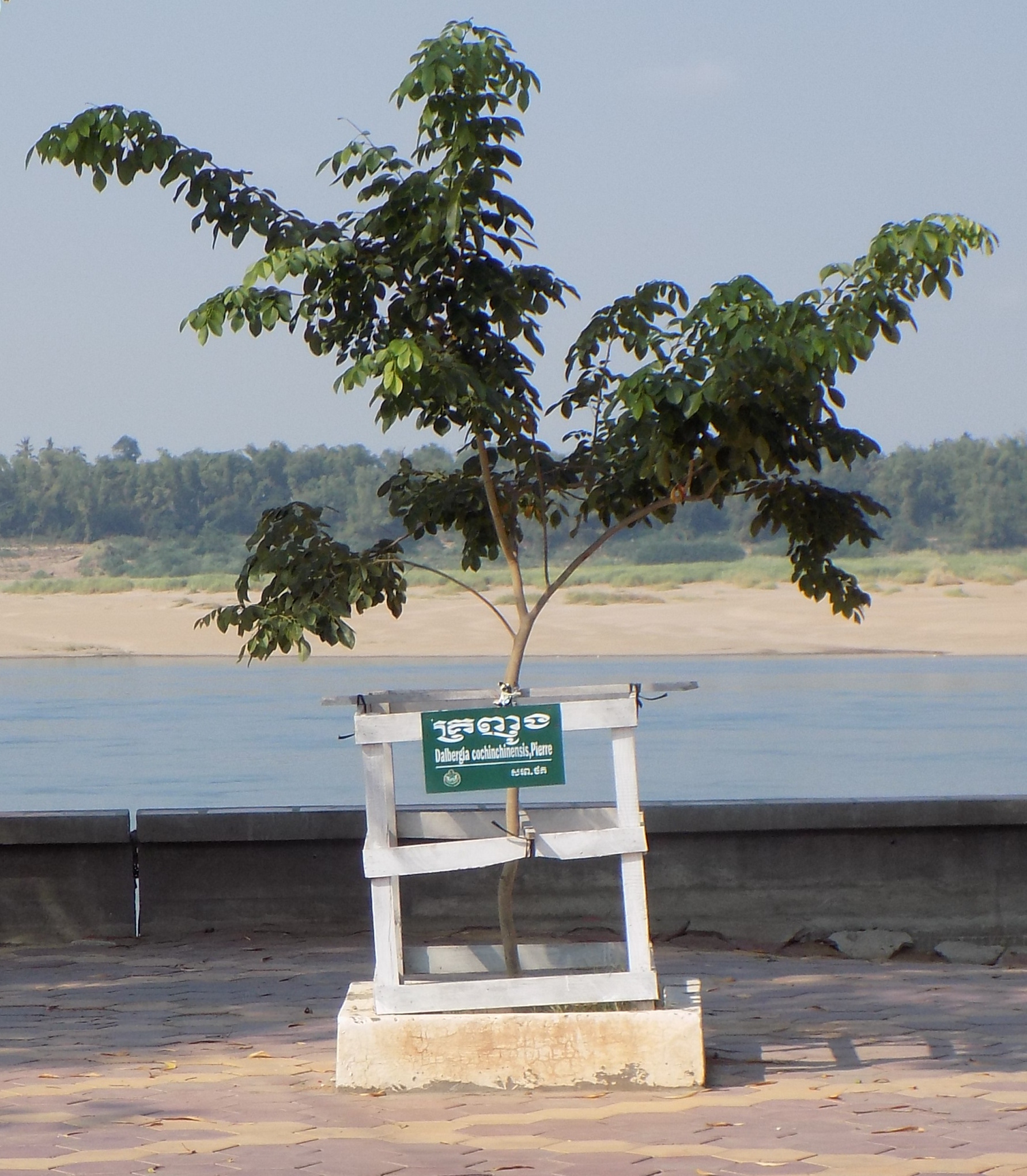
Cochinchina rosewood
Dalbergia cochinchinensis Pierre ex Laness.
Fabaceae family
Cochinchina rosewood (Dalbergia cochinchinensis) is a highly prized rosewood with dense, dark-red, fine-grained timber; illegal harvesting has driven it to Critically Endangered on the IUCN Red List.
 NE
Cogon grass
Imperata cylindrica (L.) P.Beauv.
Grass family
Cogon grass is a perennial weed spreading aggressively by rhizomes, hard to control and competing with crops for nutrients.
 NE
Flamboyant
Delonix regia (Bojer ex Hook.) Raf.
Legume family
Royal poinciana (Delonix regia (Bojer ex Hook.) Raf.), also called flamboyant, flame tree or flame of the forest, is a leguminous tree in the family Fabaceae, grown for its broad umbrella canopy and spectacular masses of scarlet-orange flowers in summer; in Vietnam it is the familiar “schoolboy flower” that shades schoolyards. According to Kew POWO it is native to Madagascar and widely cultivated throughout the tropics and subtropics. It has bipinnate leaves and five-petalled flowers with a larger standard petal streaked white and yellow; its tissues contain flavonoids (quercetin, kaempferol, rhamnetin, isorhamnetin), anthocyanins, tannins, sterols and a seed galactomannan gum.
 VU
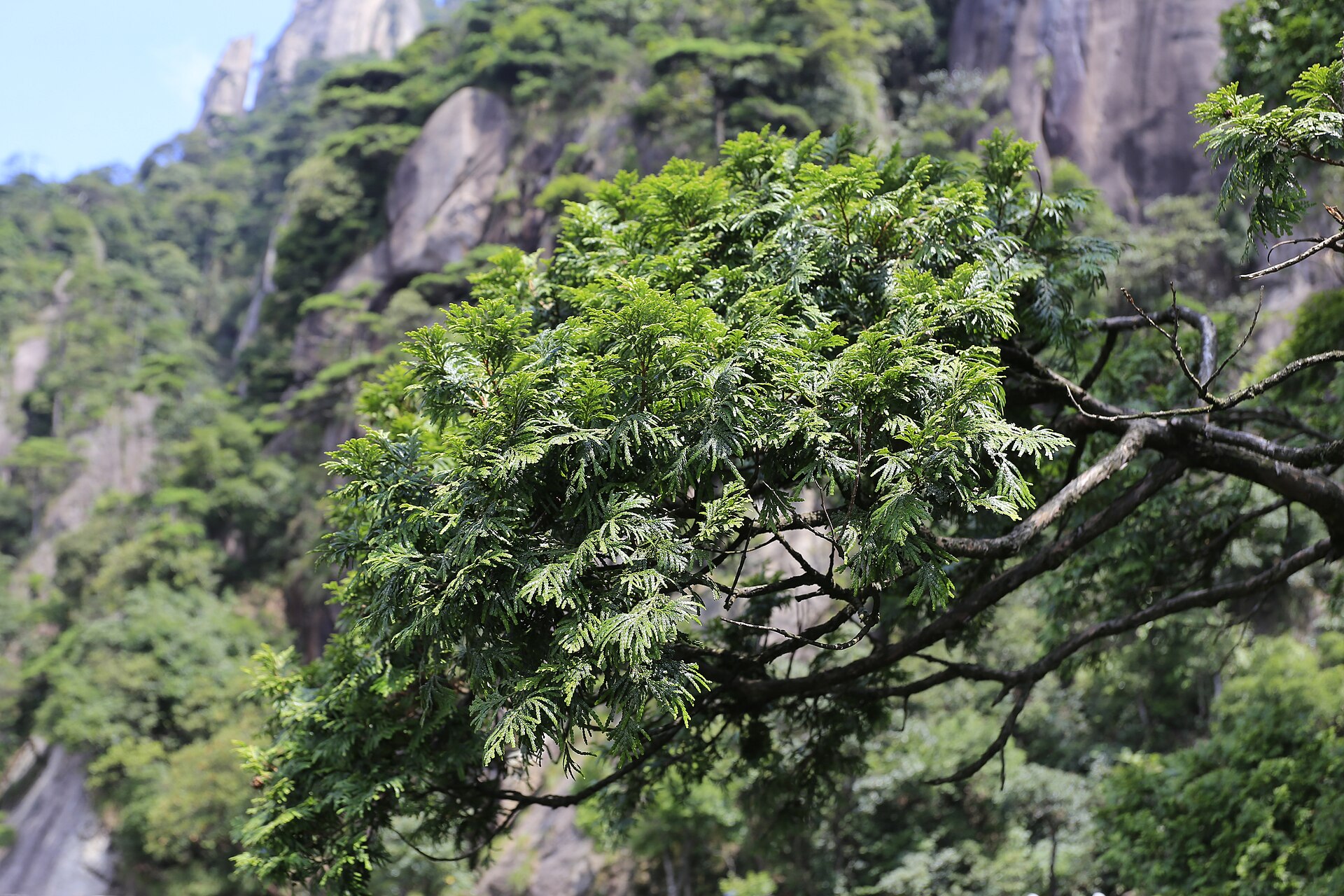
Fujian cypress
Fokienia hodginsii (Dunn) A.Henry & H.H.Thomas
Cupressaceae family
Fokienia hodginsii (Fujian cypress) is a prized cupressaceous conifer with light, fine-grained, aromatic, durable and termite-resistant wood, growing in humid montane closed evergreen forest in South-East Asia and southern China. It is an evergreen tree 20–30 m tall with a trunk that can exceed 1 m across and a conical crown; the scale-like leaves are aromatic when crushed. It is the sole species of its genus and a living relic of the Tertiary, ranging from China through Vietnam and Laos to Thailand and Myanmar. Over-exploitation of its timber led IUCN to list it as Vulnerable (VU).
 NE
Goosegrass
Eleusine indica (L.) Gaertn.
Grass family
Goosegrass (Eleusine indica) is a tufted annual grass with a prostrate-to-upright habit and a tough fibrous root system that makes it hard to pull; a widespread herbicide-resistant weed, it is also a folk medicine rich in C-glycosyl flavones (schaftoside, vitexin) with anti-inflammatory, antipyretic and antioxidant activity.
 NE
Jute
Corchorus olitorius L.
Malvaceae family
Jute mallow (Corchorus olitorius L.), also called Tossa jute, is an annual herb of the family Malvaceae and the source of a bast fibre that ranks second only to cotton in natural-fibre production. Native to tropical Africa and/or South Asia (still debated), it was domesticated for fibre mainly in India and Bangladesh. Jute is strong, cheap and biodegradable and is used for sacking, burlap, carpet backing, ropes, pulp and eco-friendly materials; the young leaves (jute mallow, molokhia) are edible, while the seeds contain cardiac glycosides (corchorin) and are not eaten.
 EN
Lim
Erythrophleum fordii Oliv.
Fabaceae family
Lim (Erythrophleum fordii) is a valuable timber tree of southern China and Vietnamese tropical forests, yielding hard, durable, close-grained wood for pillars, bridges and boat building.
 VU
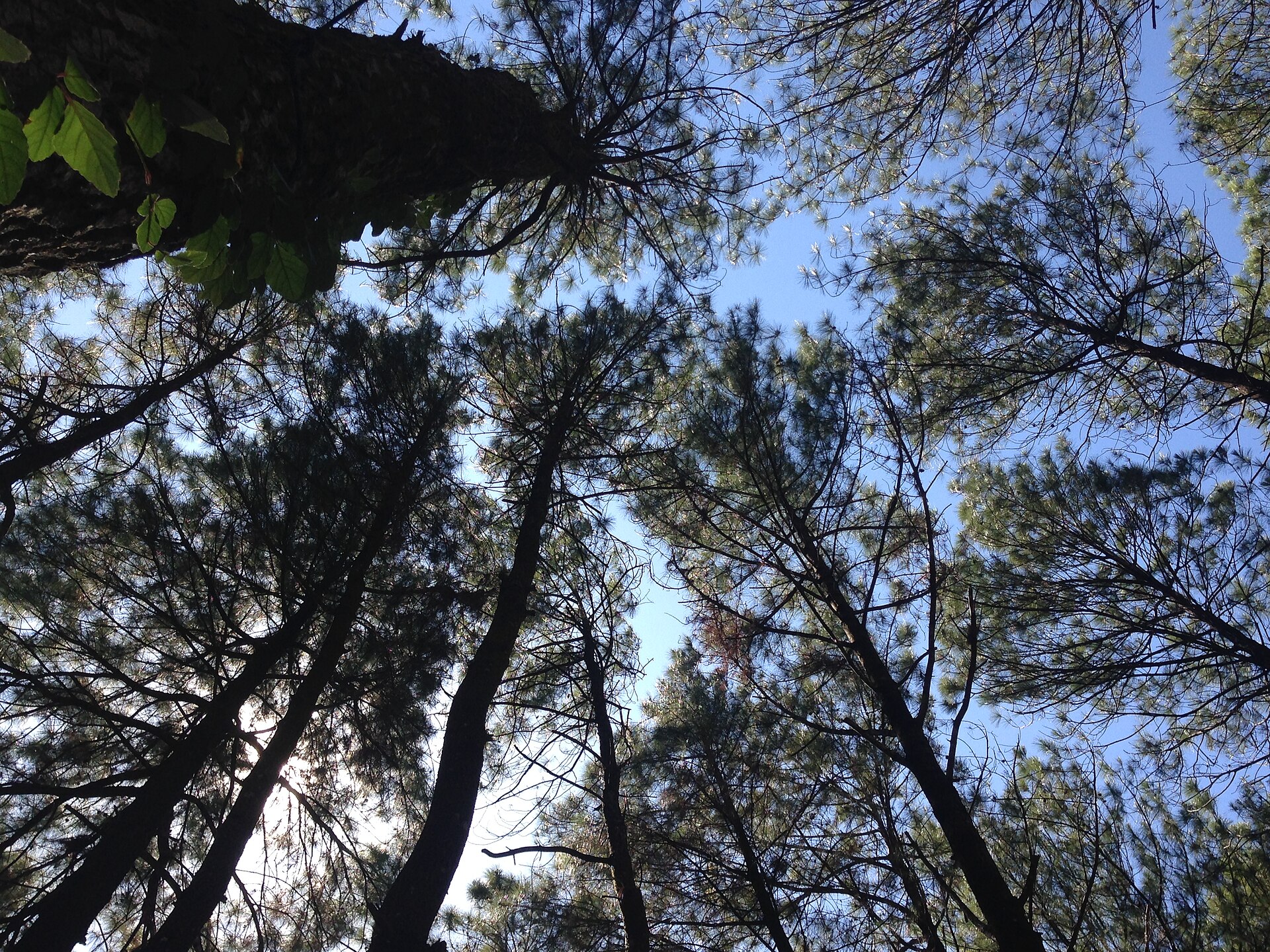
Merkus pine
Pinus merkusii Jungh. & de Vriese
Pinaceae family
Pinus merkusii (Merkus pine), also called Sumatran or Tenasserim pine, is a two-needled pine ranging from Myanmar and Thailand through Laos and Vietnam to Sumatra (Indonesia) — the only pine whose natural populations lie entirely south of the equator. It grows 20–40 m tall, has fire-resistant thick bark and forms open forests on poor soils. It yields resin rich in α-pinene and β-pinene, distilled into turpentine and rosin for paints, adhesives and paper, and its wood is used for poles, boards and pulp. IUCN lists it as Vulnerable (VU).
 NE
Nux vomica
Strychnos nux-vomica L.
Logania family
Nux vomica seeds contain the highly toxic strychnine, causing violent muscle spasms; it is among the most notorious poisonous plants.
 NE
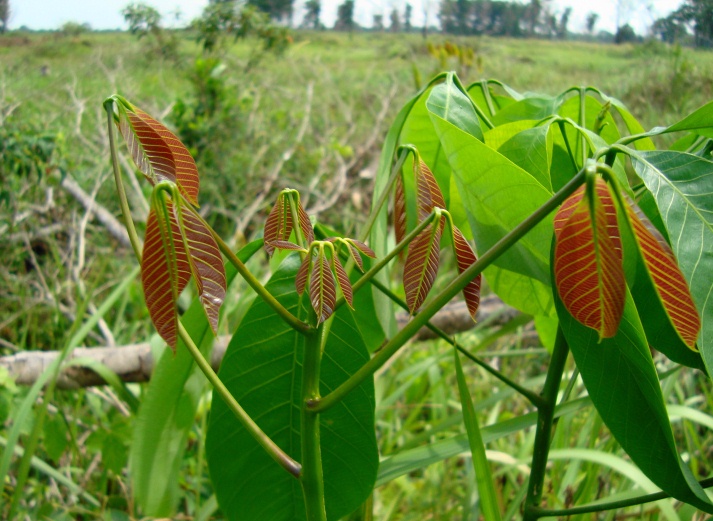
Rubber tree
Hevea brasiliensis (Willd. ex A.Juss.) Müll.Arg.
Euphorbiaceae family
The rubber tree (Hevea brasiliensis) is a large deciduous tree of the spurge family (Euphorbiaceae), native to the Amazon basin (S. Tropical America per Kew POWO: Bolivia, Brazil, Colombia, French Guiana, Peru, Venezuela). Its bark holds latex vessels yielding a white emulsion of about 60% water and 33–35% cis-1,4-polyisoprene — natural rubber, one of the most important elastic polymers. After vulcanisation was invented (1839), rubber was carried from the Amazon to Asia, and Thailand, Indonesia, Vietnam, India, China and West Africa are now the main producers. The latex contains allergenic proteins (Hev b 1–15); the IUCN lists the species as Least Concern (LC, 2020).