
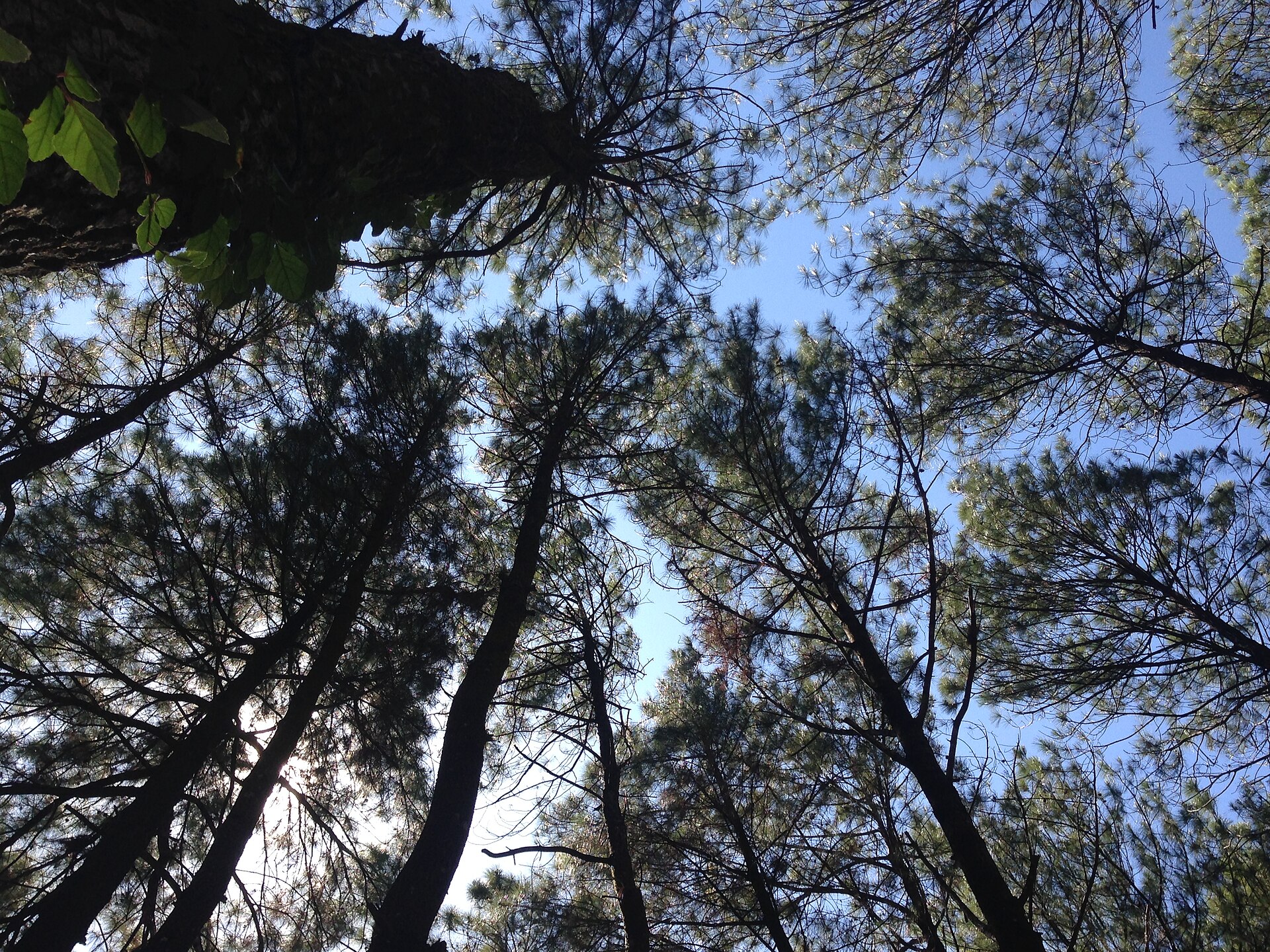
Merkus pine
Pinus merkusii Jungh. & de Vriese
Pinus merkusii (Merkus pine), also called Sumatran or Tenasserim pine, is a two-needled pine ranging from Myanmar and Thailand through Laos and Vietnam to Sumatra (Indonesia) — the only pine whose natural populations lie entirely south of the equator. It grows 20–40 m tall, has fire-resistant thick bark and forms open forests on poor soils. It yields resin rich in α-pinene and β-pinene, distilled into turpentine and rosin for paints, adhesives and paper, and its wood is used for poles, boards and pulp. IUCN lists it as Vulnerable (VU).
No ratings yet — be the first!
Gallery
 Merkus pinePine forest
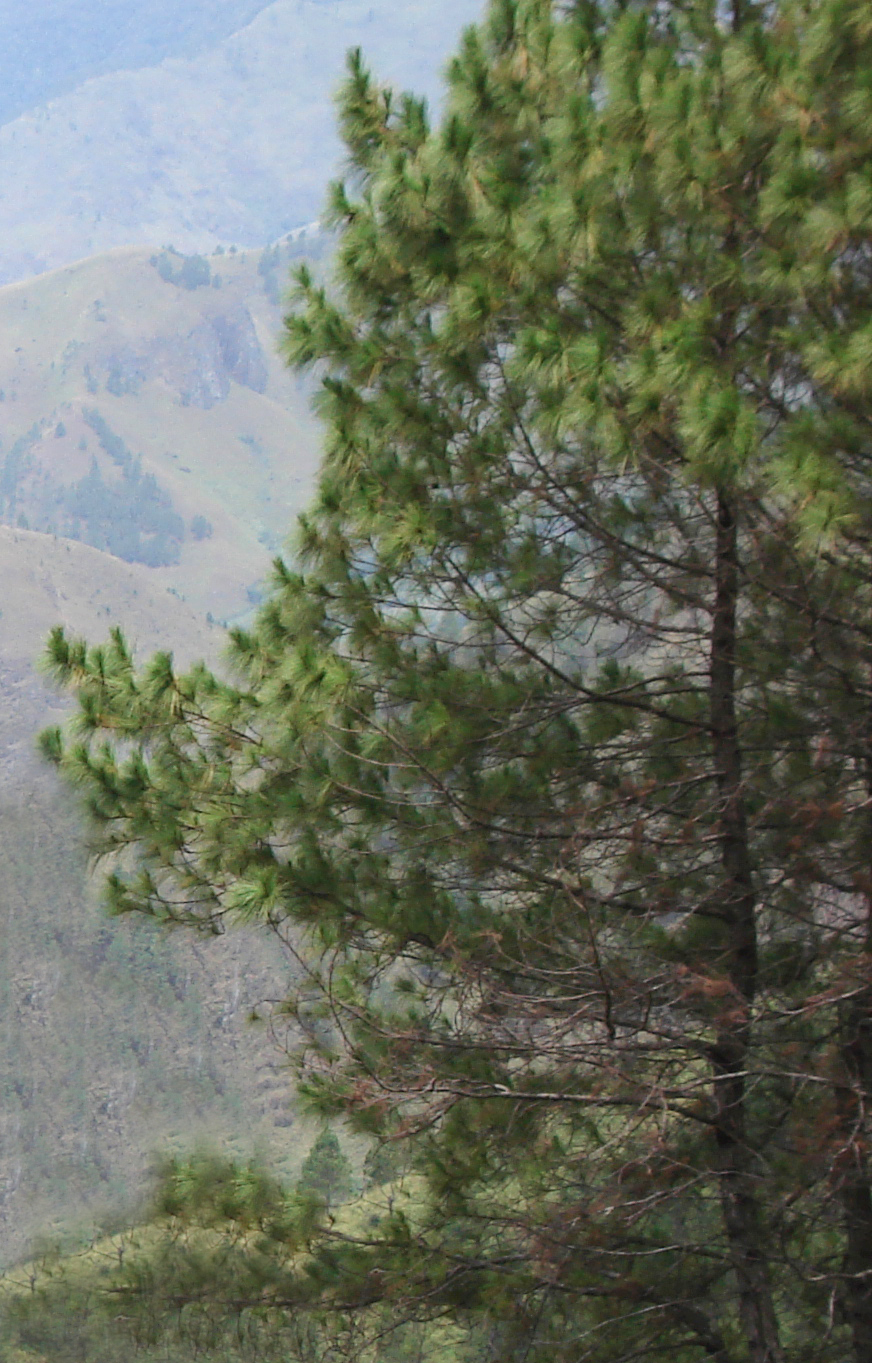 Merkus pine · photo 2
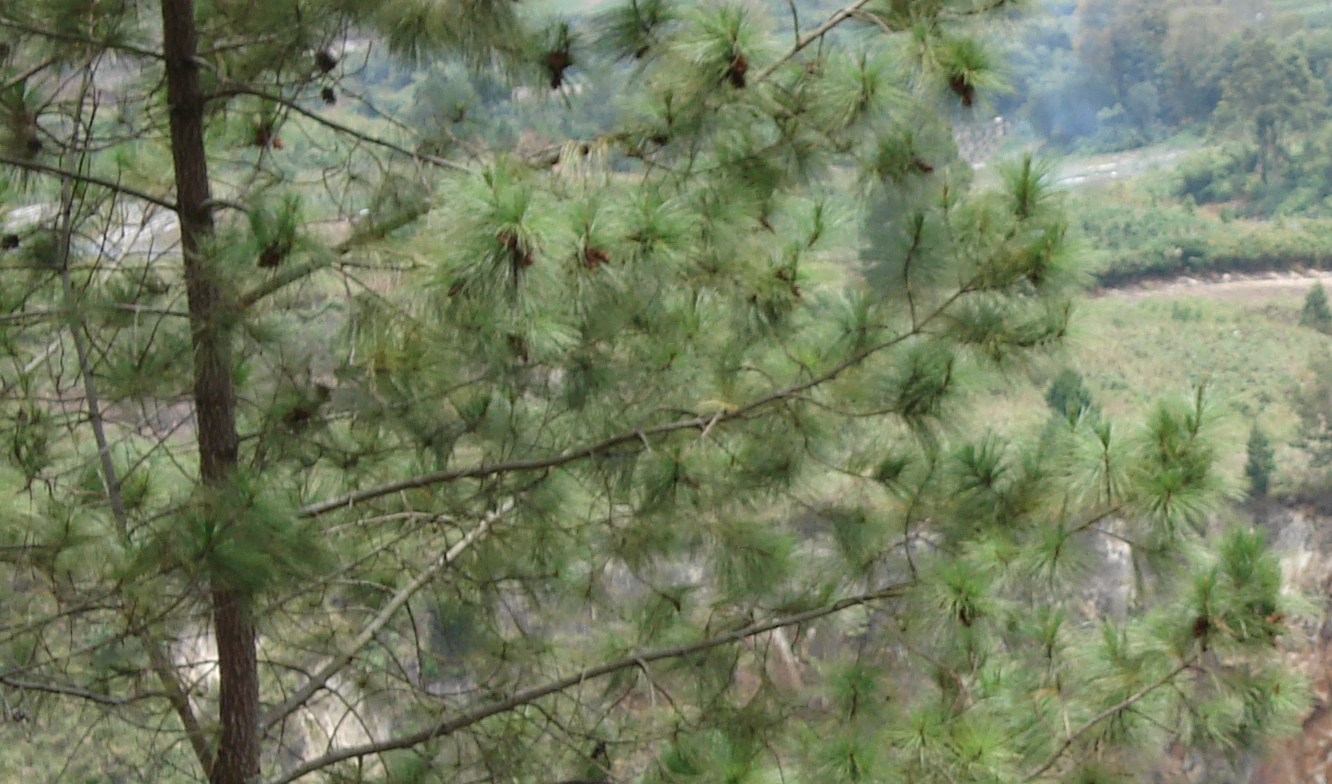 Merkus pine · photo 3
 Merkus pine
 Merkus pine
 Merkus pineMerkus pinePine forest
Photo credits: mohd fahmi on Flickr (CC BY-SA 2.0) · Ani Nur Agustin (CC BY-SA 4.0)
Overview
Pinus merkusii (Merkus pine) is a two-needled pine, an evergreen tree 20–40 m tall (sometimes to 45 m) with a straight trunk and thick, grey-brown bark deeply fissured into plates — the thick bark helps it withstand fire. The needles are borne in bundles (fascicles) of two, 15–25 cm long, slender and soft. The cones are ovoid, 5–10 cm long, and open when ripe to release wind-dispersed winged seeds. The chromosome number is 2n = 24.
Updated by lebachungtdh@gmail.com · 10/08/2026
Pinus merkusii occurs naturally from Myanmar and Thailand through Laos and Vietnam to Sumatra (Indonesia); it is the only pine with natural populations entirely south of the equator. It forms open pine forests and woodlands on poor, acidic soils and withstands seasonal grass fires thanks to its thick bark and ability to regenerate after fire. In Vietnam, natural Merkus pine forests remain in some provinces, and the species is widely planted for resin and timber.
Updated by lebachungtdh@gmail.com · 10/08/2026
The oleoresin of Merkus pine contains mainly α-pinene and β-pinene together with other monoterpenes; steam distillation separates it into turpentine (pine essential oil) and rosin — used in paints, varnishes, adhesives, coatings, binders and paper processing. Pine wood consists mainly of cellulose, lignin and hemicellulose, plus extractives (rosin, diterpene acids, essential oil). Resin tapping is an important industry in the pine-growing regions of Vietnam and Indonesia.
Updated by lebachungtdh@gmail.com · 10/08/2026
Merkus pine is tapped for resin to distil turpentine and rosin for the paint, adhesive, varnish, printing-ink and paper industries. The straight-grained, light, easily worked wood is used for poles, boards, furniture and pulp (paper pulp, wood chips). Pine forests also serve for protection, controlling erosion on hilly land, as windbreaks and for soil improvement; the tree is also planted for ornament and shade. In many places Merkus pine is a mainstay plantation species for resin-based forestry.
Updated by lebachungtdh@gmail.com · 10/08/2026
Pinus merkusii is listed as Vulnerable (VU) by IUCN because natural populations have declined through logging, over-tapping and land conversion; nevertheless the species is widely planted across South-East Asia. As for safety, pine resin and turpentine are flammable and can irritate the skin, eyes and respiratory tract, and must not be swallowed; ventilation and protective equipment are needed when distilling or processing. Do not use pine resin as a self-prescribed medicine or food.
Updated by lebachungtdh@gmail.com · 10/08/2026
Life cycle
From seed to productSeed
Merkus pine seeds are winged and drift down from mature cones; keep them cool and sow early to retain viability.
Germination
Seeds germinate on bare mineral soil, especially after seasonal forest fires, when the ground cover has burned away.
Seedling
Seedlings grow in light-demanding clusters with soft two-needled foliage, drought-tolerant on poor hillside soils.
Mature plant
Reaching 20–40 m, the tree builds turpentine in trunk and roots beneath thick fissured bark; male and female cones grow separately.
Logging
Resin is tapped and drilled, then distilled into turpentine and rosin; sawn wood serves construction and pulp.
Distribution & origin
Share of recorded occurrences by region- Vietnam28%
- Thailand20%
- Laos14%
- Indonesia (Sumatra)12%
- Myanmar10%
- Cambodia6%
- Philippines (planted/introduced)10%
Chemical composition
Relative content in agarwood resin- CelluloseWood cell-wall framework40%
- LigninGives wood its hardness26%
- HemicelluloseBinds the cell wall16%
- α-Pinene (turpentine)Main resin component9%
- β-Pinene and other monoterpenesPine aroma, solvent5%
- Rosin and diterpene acids (extractives)Rosin for adhesives and paints4%
Uses
- Tapping resin to distil turpentine and rosin
- Construction timber, poles, boards and furniture
- Pulp and wood chips (paper)
- Resin in paints, adhesives, varnish and printing ink
- Protective planting, controlling erosion on hilly land
- Ornamental, shade and soil improvement on hills
Properties
- Colour
- White to pale pinkish
- Grain
- Straight, coarse with knots
- Density
- 0.45 – 0.65 g/cm³
- Scent
- Pine-scented
Habitat & conservation
Open pine forests and woodlands on poor, acidic, well-drained soils; withstands seasonal fire thanks to thick bark and post-fire regeneration. Ranges from Myanmar and Thailand through Laos and Vietnam to Sumatra and the Philippines.
Conservation
Pinus merkusii is listed as Vulnerable (VU) by IUCN. Natural populations have declined through logging, over-tapping and land conversion, while the species is widely planted in Indonesia and Vietnam for resin and timber.
References
- 1Pinus merkusii — The IUCN Red List of Threatened Species — IUCN, 2013
- 2Gums, Resins and Latexes of Plant Origin (NWFP 6) — FAO (Lương thực và Nông nghiệp LHQ), 1995
- 3Plants of the World Online — Pinus merkusii Jungh. & de Vriese — Kew Science, 2024
- 4Pinus merkusii — Merkus pine, description and uses — English Wikipedia, 2026
- 5Thông trắng — đặc điểm, nhựa thông, công dụng — Vietnamese Wikipedia, 2026