
Syzygium guineense
Syzygium guineense
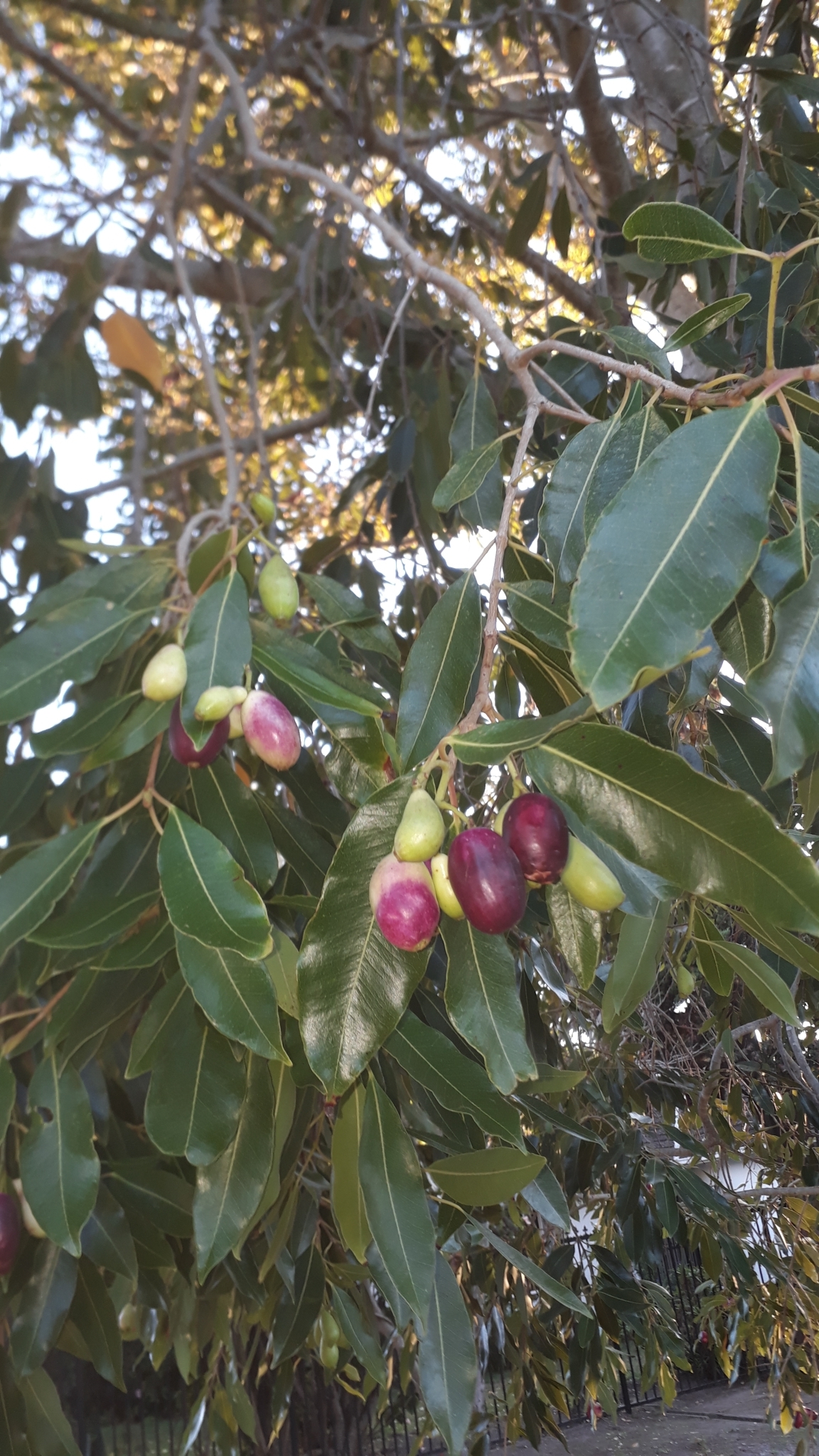
Syzygium guineense (Bambara: Kokisa) is an evergreen leafy forest tree of the family Myrtaceae, found in many parts of Africa both wild and domesticated. Both its fruits and leaves are edible; the pulp and the fruit skin are sucked and the seed discarded. It is sometimes called "waterberry", but this may also refer to other species of Syzygium.
No ratings yet — be the first!
Gallery
 Syzygium guineenseSyzygium guineense
 Syzygium guineense 25188238
 Syzygium guineense 71895621
 Syzygium guineense guineense 15594186Syzygium guineenseSyzygium guineense
Overview
Syzygium guineense can grow as a tree, a shrub, or a pyrophytic subshrub, depending on its habitat. As a tree its height is usually between 10 and 15 meters, but some specimens have been found as tall as 25 meters. The trunk is broad and fluted and the crown rounded and heavy, with a bark that is smooth when young, but becomes rough and black with age. The branches are dropping, the stems are thick and angular. The young leaves are purple-red in color, but as they mature their color becomes dark green; the leaves in general are shiny and smooth on both surfaces, with a tip that is long but rounded, on a short grooved stalk. The flowers of S. guineense have white, showy stamens, in dense branched heads 10 centimeters across, yielding a honey-sweet smell that attracts many insects.
Life cycle
From seed to productSeed & germination
The plant is propagated mainly by **seed**: sow fresh or pre-treated seed in loose, moist soil and keep it evenly damp; germination follows within a few weeks.
Seedling & growth
Seedlings establish, forming leaves and roots; growth rate depends on light and moisture.
Flowering
The plant blooms with **creamy-white flowers, September–November**; pollination is by insects and wind.
Fruiting & harvest
After flowering the plant sets fruit and seed; **purple-black ripe fruits picked December–February**.
Distribution & origin
Share of recorded occurrences by region- Congo - Kinshasa11%
- Burkina Faso10%
- Benin8%
- Cameroon6%
- Tanzania6%
- Zambia5%
- Ethiopia5%
- Other regions49%
Uses
- guineense is a much-appreciated shade tree for both the homestead and the home garden.
- It is considered a famine food, eaten by subsistence farmers when their crops fail.
Habitat & conservation
Syzygium guineense ranges widely through sub-Saharan Africa, and is also present in the southwestern Arabian Peninsula. It grows in a range of habitats, including lowland and montane forests, forest edges, woodlands, humid savannas, swamps, and mangrove edges, from sea level up to 2,500 meters elevation. It prefers moist soils with a high water table beside rivers, but will also grow in open woodland.
References
- 1Syzygium guineense — Wikipedia — Wikipedia (CC BY-SA 4.0), 2026
- 2White, Frank (1927-1994) — International Plant Names Index,
- 3Tropicos - Name Search — www.tropicos.org,
- 4GBIF — occurrence records of Syzygium guineense — GBIF, 2026
- 5IUCN Red List — Syzygium guineense — IUCN, 2024
- 6Hình ảnh — Wikimedia Commons (6 ảnh, giấy phép CC/PD) — Wikimedia Commons, 2026