

Szechuan lovage
Ligusticum striatum DC.
Szechuan lovage (Ligusticum striatum DC.) is a flowering plant native to India, Kashmir, and Nepal. It is primarily recognized for its traditional use in Chinese medicine.
No ratings yet — be the first!
Gallery
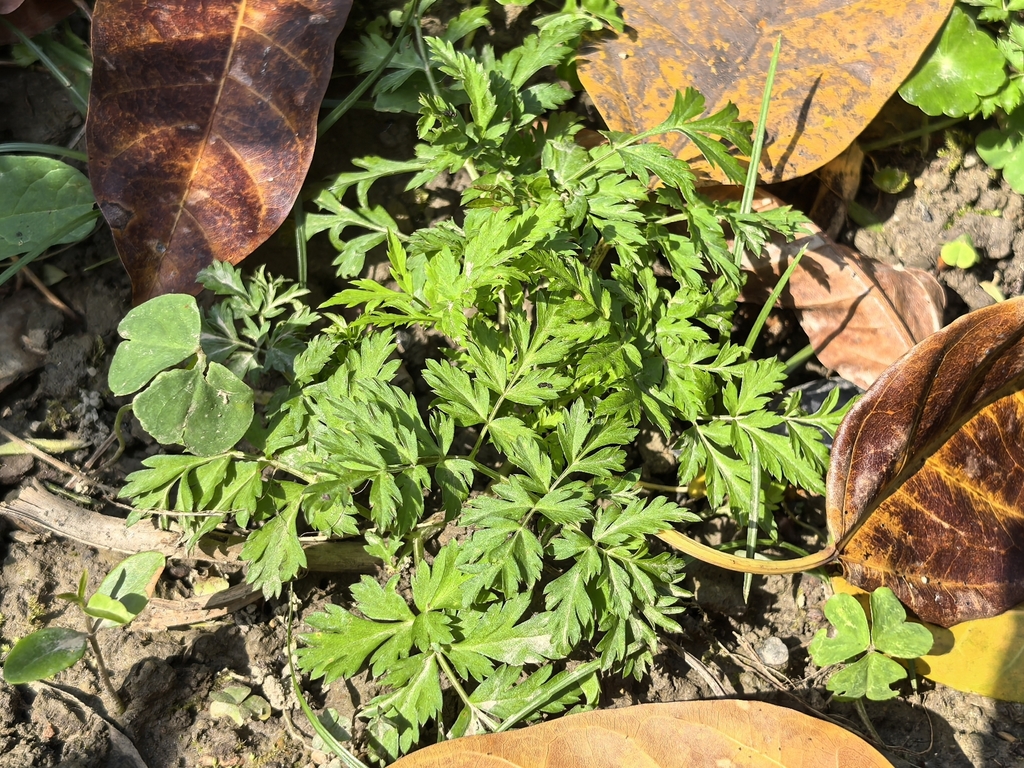 Szechuan lovageSzechuan lovage
 Szechuan lovageSzechuan lovageSzechuan lovage
Overview
Szechuan lovage is a member of the carrot family (Apiaceae). The plant is valued within traditional Chinese medicine, frequently cited as one of fifty fundamental herbs. It is known for its distinctive flavour profile, which contributes to its medicinal applications.
Updated by lebachungtdh@gmail.com · 10/15/2026
The plant typically grows to a height of between 0.5 and 1.5 meters. It possesses distinctive, finely divided, serrated leaves, giving it a unique appearance. These leaves are the primary source of its flavour and aroma.
Updated by lebachungtdh@gmail.com · 10/15/2026
Szechuan lovage is a perennial herb, meaning it survives and regrows for more than two years. It exhibits a rhizomatous growth habit, forming underground stems that allow for vegetative spread.
Updated by lebachungtdh@gmail.com · 10/15/2026
Life cycle
From seed to productRhizome planting
One- to two-year-old **rhizomes** are cut into 2–3-bud setts, treated against rot and planted where drainage is good.
Sprouting
The rhizome roots down and shoots push through the soil; the plant begins photosynthesising and storing reserves.
Growth & flowering
In season the plant opens **small white umbel flowers, July–August**, adding colour and nectar for insects.
New rhizomes & harvest
After a full growing season the plant retreats to its storage organ; **2-year-old rhizomes dug in summer–autumn**.
Uses
- Used in traditional Chinese medicine.
- Utilized for its flavouring properties in culinary applications.
- Historically employed as a medicinal herb.
- Valued for its aromatic compounds.
- 活血通络
Habitat & conservation
Szechuan lovage is native to the mountainous regions of India, Kashmir, and Nepal, typically found in damp, shaded areas. Its distribution is largely confined to these Himalayan foothills.
Conservation
Szechuan lovage has not been assessed by the IUCN Red List (NE). As a medicinal plant that is harvested and cultivated, it benefits from sustainable collection and propagation to protect wild genetic resources.
References
- 1Wikipedia – Ligusticum striatum — English Wikipedia,
- 2Kew POWO – Ligusticum striatum — Plants of the World Online (Kew),
- 3Wikidata – Q15583445 — Wikidata,