

Saposhnikovia divaricata
Saposhnikovia divaricata (Turcz.) Schischk.
Saposhnikovia is a monotypic genus of flowering plants in the family Apiaceae. Its only species is Saposhnikovia divaricata, known as fángfēng 防風 (lit.
No ratings yet — be the first!
Gallery
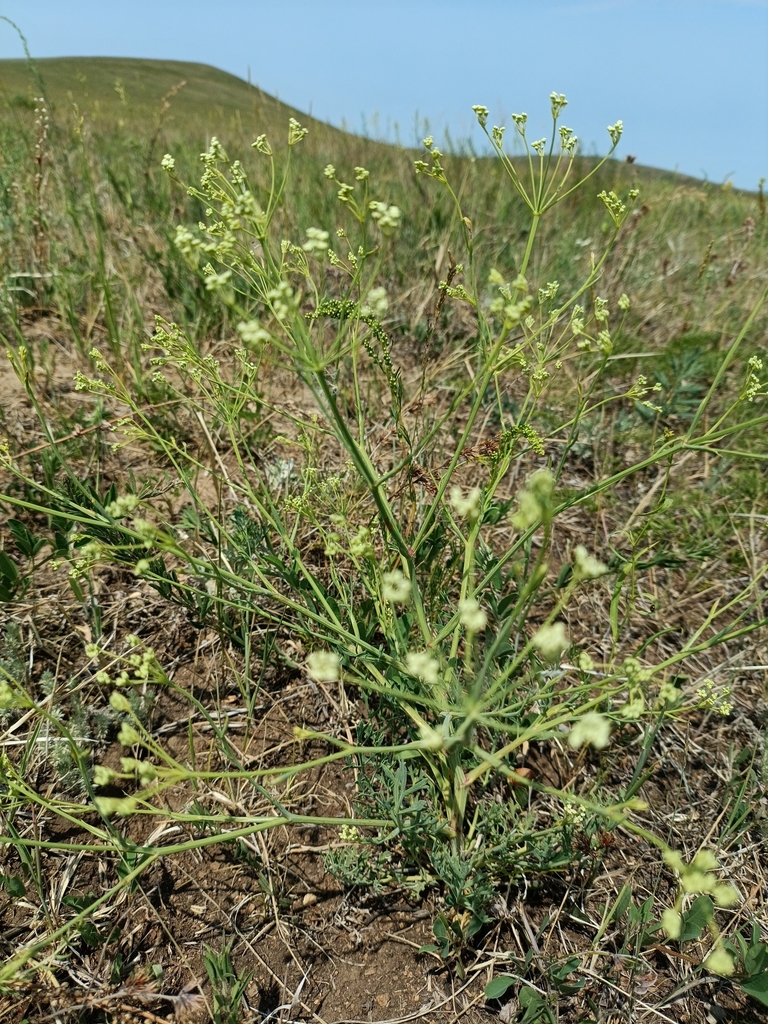 Saposhnikovia divaricataSaposhnikovia divaricata
 Saposhnikovia divaricataSaposhnikovia divaricataSaposhnikovia divaricata
Overview
Saposhnikovia is a monotypic genus of flowering plants in the family Apiaceae. Its only species is Saposhnikovia divaricata, known as fángfēng 防風 (lit. "protect against the wind") in Chinese, bangpung in Korean, and siler in English.
Updated by lebachungtdh@gmail.com · 10/15/2026
The plant is still frequently referenced under the obsolete genus name Ledebouriella in many online sources devoted to traditional Chinese medicine. It was first described as Stenocoelium divaricatum by Nikolai Turczaninow in 1844, and transferred to Saposhnikovia in 1951.
Updated by lebachungtdh@gmail.com · 10/15/2026
Life cycle
From seed to productSeed & germination
Ripe **seed** is collected and sown fresh or stored dry; germination is best on a moist, well-drained seedbed.
Seedling & growth
Young plants gain height, branch and build a stable canopy in their first growing season.
Flowering
In season the plant opens **small white flowers in umbels, July–August**, adding colour and nectar for insects.
Fruiting & harvest
Fruit ripens and seed is collected for propagation; **2–3-year-old roots dug in autumn–winter**.
Uses
- The plant is still frequently referenced under the obsolete genus name Ledebouriella in many online sources devoted to traditional Chinese medicine.
- Phòng phong có vị ngọt, cay, tính ôn (mát), quy vào các kinh Can, Phế, Tỳ, Vị và Bàng quang, có tác dụng phát biểu, trừ phong thấp hay được dùng để trị ngoại cảm, đau khớp xương, trị uốn ván, mắt đỏ, sang lở.
Habitat & conservation
该属仅有防风(Saposhnikovia divaricata)一种,分布于中国北部和东北部。
Conservation
Saposhnikovia divaricata has not been assessed by the IUCN Red List (NE). As a medicinal plant, it benefits from sustainable collection and propagation to protect wild genetic resources.
References
- 1Wikipedia – Saposhnikovia — Wikipedia,
- 2Kew POWO – Saposhnikovia divaricata — Plants of the World Online (Kew),
- 3Wikidata – Q6672500 — Wikidata,