

Gallery
 Barringtonia — TreeBarringtonia — Tree
 Barringtonia — Flower buds
 Barringtonia — New growth
 Barringtonia — Foliage
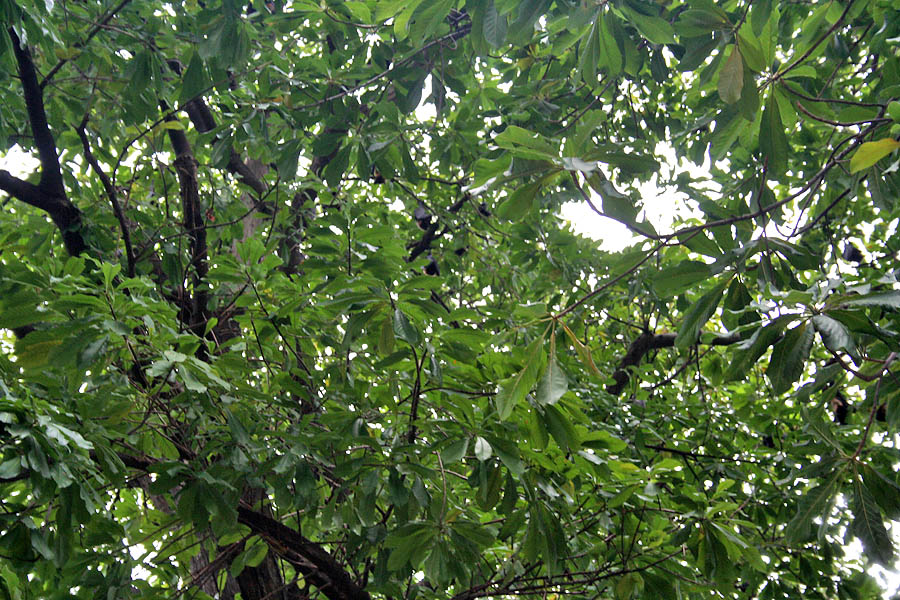 Barringtonia — Riverside treeBarringtonia — TreeBarringtonia — Tree
1 / 6
Overview
Barringtonia acutangula grows along rivers and ponds and tolerates flooding; its red flower spikes open at night, dangling toward the water. Prized for its form and auspicious meaning, it is planted in gardens, water features and urban landscapes.
Life cycle
From seed to productSeed & germination
The plant is propagated mainly by **seed**: sow fresh or pre-treated seed in loose, moist soil and keep it evenly damp; germination follows within a few weeks.
Seedling & growth
Seedlings establish, forming leaves and roots; growth rate depends on light and moisture.
Flowering
The plant blooms with **red-pink flowers in pendulous racemes, March–June**; pollination is by insects and wind.
Fruiting & harvest
The plant matures and blooms profusely in season; **peak bloom at the start of the rains; seed gathered from ripe fruit July–September**.
Uses
- Landscape and waterside feature
- Garden feature tree
Properties
- Used part
- Ornamental tree
- Trait
- Water-loving, night-blooming
References
- 1Plants of the World Online — Barringtonia acutangula (L.) Gaertn. — Kew Science, 2026
- 2Barringtonia acutangula (freshwater mangrove) — English Wikipedia, 2026
- 3Lộc vừng — đặc điểm, sinh thái — Vietnamese Wikipedia, 2026
- 4Nguồn ảnh: Lalithamba (CC BY 2.0) — Wikimedia Commons,
- 5Nguồn ảnh: Steve Fitzgerald (CC BY-SA 4.0) — Wikimedia Commons,
- 6Nguồn ảnh: J.M.Garg (CC BY 3.0) — Wikimedia Commons,