Ephedra altissima
Ephedra altissima
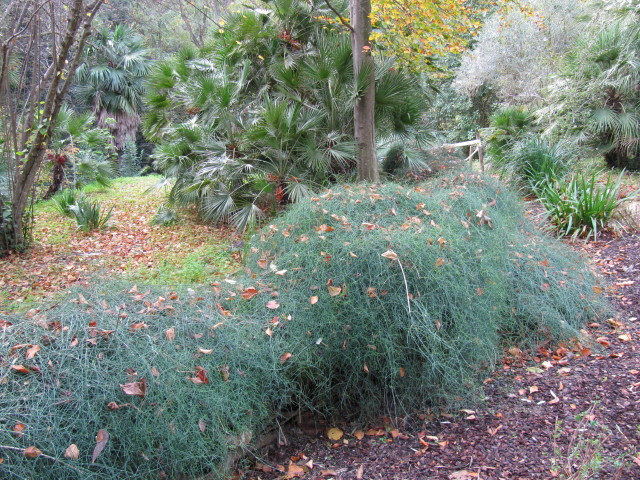
Ephedra altissima is a species of Ephedra that is native to the western Sahara (Morocco, Algeria, Tunisia, Libya, Chad, Mauritania), and also to the Canary Islands. The species is cultivated as an ornamental plant and medicinal plant.
No ratings yet — be the first!
Gallery
 Ephedra altissima 180208477Ephedra altissima — Leonora Enking 001
 01-14-12-12 Ephedra altissima
 T3 06 Ephedra altissima par Pierre-Joseph Redouté
 Ephedra altissima 289678371Ephedra altissima 180208477Ephedra altissima — Leonora Enking 001
Overview
Ephedra altissima is a plant species in the family Ephedraceae. GBIF holds 845 occurrence records across 18 countries. Its records concentrate in Morocco, France, Algeria, Tunisia. It is listed as "least concern" on the IUCN Red List.
Life cycle
From seed to productSeed & germination
The plant is propagated mainly by **seed**: sow fresh or pre-treated seed in loose, moist soil and keep it evenly damp; germination follows within a few weeks.
Seedling & growth
Seedlings establish, forming leaves and roots; growth rate depends on light and moisture.
Flowering
The plant blooms with **small yellow-green cones, late winter–spring**; pollination is by insects and wind.
Fruiting & harvest
After flowering the plant sets fruit and seed; **red ripe cones harvested for seed in late spring–summer**.
Distribution & origin
Share of recorded occurrences by region- Morocco21%
- France14%
- Algeria12%
- Tunisia4%
- Spain3%
- United States1%
- Italy1%
- Other regions44%
Uses
- The members of this genus have alkaloid ephedrine which are integral in the treatment of asthma and other related respiratory issues.
- By using the entire plant and not just the stem it has been observed, as compared to isolated ephedrine, to have few side effects.
- This is used to treat symptoms not cure respiratory issues.
Habitat & conservation
This plant is located in Algeria, Chad, Libya, Mauritania, Morocco, Spain, Tunisia, and the western Sahara. It can be viewed at elevations between 10 meters to 700 meters above sea level.
References
- 1Ephedra altissima — Wikipedia — Wikipedia (CC BY-SA 4.0), 2026
- 2Ephedra altissima - Desf. — pfaf.org,
- 3GBIF — occurrence records of Ephedra altissima — GBIF, 2026
- 4IUCN Red List — Ephedra altissima — IUCN, 2024
- 5Hình ảnh — Wikimedia Commons (6 ảnh, giấy phép CC/PD) — Wikimedia Commons, 2026